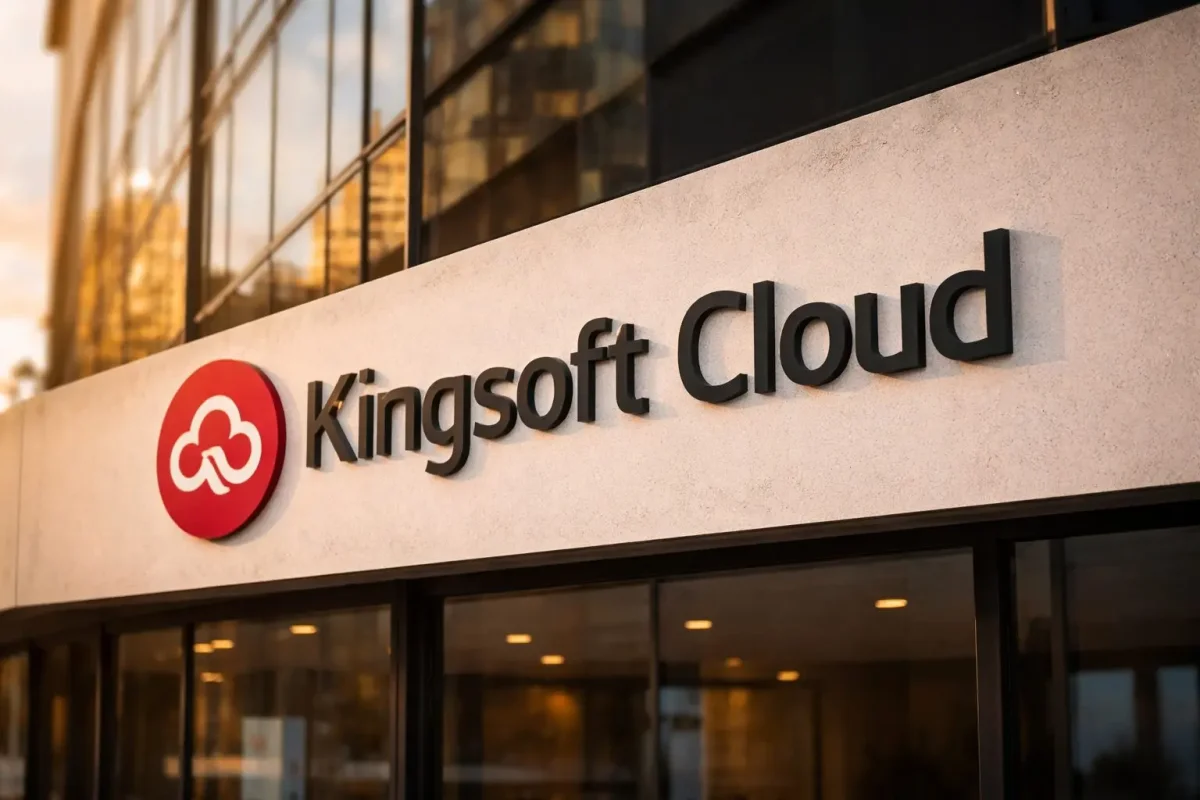
Shares of Kingsoft Cloud Holdings Limited experienced a notable decline in early trading on Monday, March 2, 2026, shedding 5.6% to trade at $12.72 by 9:36 a.m. EST. The stock fluctuated between $12.60 and $12.85 during the initial session, reflecting heightened investor unease. This move extends a period of volatility for the China-based cloud services provider, whose shares have traded within a 52-week range of $10.29 to $19.57 on U.S. markets.
Regulatory Filing Details Increased Transaction Caps
The downturn followed the disclosure of a Form 6-K filing with the U.S. Securities and Exchange Commission, which referenced a Hong Kong exchange announcement. The filing, signed by Acting Chief Executive Officer Zou Tao and dated March 1, detailed revised "annual caps" under an existing framework agreement with its major shareholder, Kingsoft Corporation. According to the document, Kingsoft Corporation holds approximately 32.94% of Kingsoft Cloud's shares, making these deals subject to Hong Kong's connected-transaction rules.
Specifically, the company's board approved increases to the maximum annual values for comprehensive property services and related right-of-use assets for the 2026 and 2027 fiscal years. The cap for property services was raised to 28.1 million yuan for 2026 and 29.3 million yuan for 2027. More significantly, the maximum value for right-of-use assets linked to property leases was elevated to 65.6 million yuan for 2026 and 66.1 million yuan for 2027. A right-of-use asset is recognized on a balance sheet when a lease commences, representing the company's right to utilize a leased property.
Investor Scrutiny on Related-Party Dealings
The announcement has redirected investor attention to a recurring concern for shareholders of smaller China-based American Depositary Receipts (ADRs): the nature and scale of ongoing transactions with controlling shareholders. While the established caps represent upper limits rather than firm spending commitments, the disclosure raises questions about potential future fixed-cost obligations. The filing also noted plans to transition some leases to a structure where the Kingsoft Group would lease properties before sub-leasing them to Kingsoft Cloud, with further details anticipated from Hong Kong exchanges.
For the market, the core issue extends beyond mere office expansion. Analysts point to the risk that larger space requirements could lock the company into higher overhead costs at a time when investor risk appetite for less-liquid names can evaporate quickly. The increased caps underscore the ongoing financial and operational ties between the cloud subsidiary and its parent corporation.
Broader Market Context and Forthcoming Catalysts
Kingsoft Cloud's decline occurred against a backdrop of broader market weakness, as index futures slipped amid concerns that persistent geopolitical turmoil in the Middle East could maintain upward pressure on oil prices. "The market is taking it relatively well, considering the headlines over the weekend," commented Adam Turnquist, chief technical strategist at LPL Financial, regarding the overall market sentiment.
Traders and investors are now looking ahead to two key events. First, possible updates from Hong Kong regarding the specifics of the proposed sublease arrangements. Second, and potentially more impactful for high-beta stocks like KC, is the release of the U.S. employment report scheduled for Friday, March 6. This data point from the Bureau of Labor Statistics frequently triggers significant volatility in growth-oriented and technology shares.
The situation highlights the dual regulatory environment in which Kingsoft Cloud operates, adhering to disclosure requirements in both Hong Kong and the United States. The use of annual caps is a standard practice under Hong Kong regulations to limit the monetary value of recurring transactions between related parties. However, the material increase in these limits has clearly given pause to investors assessing the company's future cost structure and governance.
As the trading day progressed, the stock's performance remained a focal point, serving as a reminder of the specific sensitivities associated with cross-listed Chinese technology firms. The company's ability to manage these related-party relationships while pursuing independent growth will likely remain under scrutiny in the coming quarters.