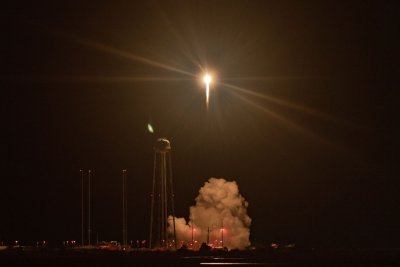
SpaceX (NASDAQ:SPCX) conducted the 13th flight of its Starship vehicle on Friday, July 25, 2026, from its Starbase facility in Texas. The mission successfully placed 20 Starlink V3 satellites into a suborbital trajectory, marking a key step in the rollout of the upgraded satellite constellation. However, the Super Heavy booster failed to complete its landing burn, crashing into the Gulf of Mexico at high velocity, underscoring the ongoing challenges of achieving full reusability.
The flight carried only one-third of Starship's maximum capacity of 60 V3 satellites, as SpaceX continues to test the vehicle's capabilities. The satellites briefly connected to the Starlink network before reentering the atmosphere and disintegrating as planned, with SpaceX collecting telemetry data from each unit. The upper stage successfully reignited a Raptor engine in orbit and performed a controlled splashdown in the ocean, with CEO Elon Musk confirming the vehicle was "intact, floating in the ocean and transmitting telemetry."
Financial Implications
The mixed results come at a critical time for SpaceX, as the company's capital expenditures continue to outpace operating income. Space and Connectivity reported $2.38 billion in capital expenditures during the first quarter, double the $1.19 billion in operating income from the Connectivity segment. Research and development expenses for the space segment surged 77% year-over-year to $930 million, contributing to an operating loss of $662 million, compared to a loss of $70 million a year earlier.
SpaceX shares closed the regular session at $115.07, down 2.7% for the day, and fell further to $113.38 in after-hours trading, a decline of 1.5%. The stock ended the week 7.2% lower and is now trading 14.8% below its initial public offering price of $135. The broader space sector also experienced selling pressure, with Rocket Lab USA (NASDAQ:RKLB) dropping 8.7% and AST SpaceMobile (NASDAQ:ASTS) falling 5.0% on Friday.
Technical Setbacks
SpaceX spokesperson Dan Huot acknowledged the booster issue, stating, "We were targeting a softer splashdown," but the vehicle "came in with quite a bit of velocity still." The company had updated engine relight equipment and added heat-shield tiles with load sensors after Flight 12, but the booster landing remains elusive. The upper stage's successful reentry and splashdown, however, provided valuable data on heat-shield performance and reentry dynamics.
Investors will be closely watching Monday's market reaction, the first full regular-session response to the flight. SpaceX is scheduled to report quarterly results on August 4 at 4:30 p.m. ET, which will provide further insight into the financial impact of Starship development.
Regulatory and Operational Risks
Booster relight reliability, heat-shield performance, and regulatory approvals remain significant risks. Any additional delays could impede the rollout of the V3 constellation and sustain elevated capital expenditures. Flight 13 addressed two key uncertainties: the deployment of V3 satellites and the endurance of the upper stage. However, full reusability was not demonstrated, and the next evaluation for Starship will focus on achieving reliable booster recovery.